
Fintech UX design for SaaS and AI-powered financial products
Sign-up and identity checks people finish, money screens that show status and fees, and AI answers that cite their source. Designed with your compliance team in the review loop.
In short
Fintech UX design shapes the user experience (UX) of software that moves, tracks or advises on money, along with its user interface (UI). ui-ux.agency, tkxel's design team, designs fintech SaaS and AI-powered financial products for US teams: account opening with know your customer (KYC) checks, payments and payouts, trading and spending dashboards, and AI money assistants. Rules such as the Customer Identification Program and Financial Industry Regulatory Authority (FINRA) Rule 2210 shape the flows they cover from day one.





- Senior designers only
- NDA signed on request
- Answer within one business day, ET
Get a free consultation
No-cost project review · answer within one business day, ET
Which fintech products have we redesigned?
How we design for fintech
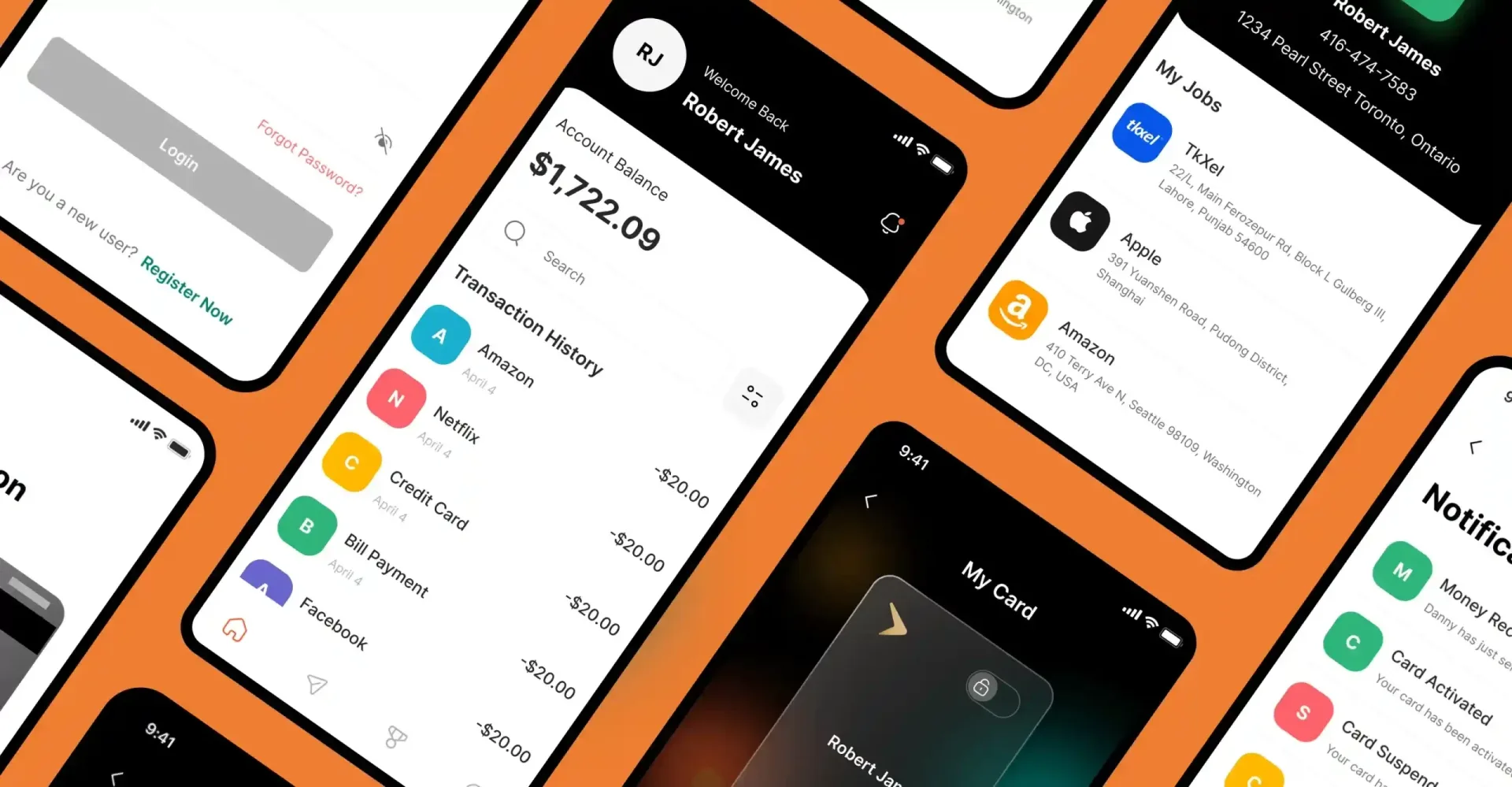
Our fintech UX design work starts where money products lose people: the identity check, the first transfer and the first number nobody can explain. We design and test those paths before anything else.
- KYC onboarding and account-opening flows that collect the Customer Identification Program basics in short steps a user can pause and resume
- Payment, transfer and payout screens that show the fee and arrival time before the user taps send, and the transfer status after
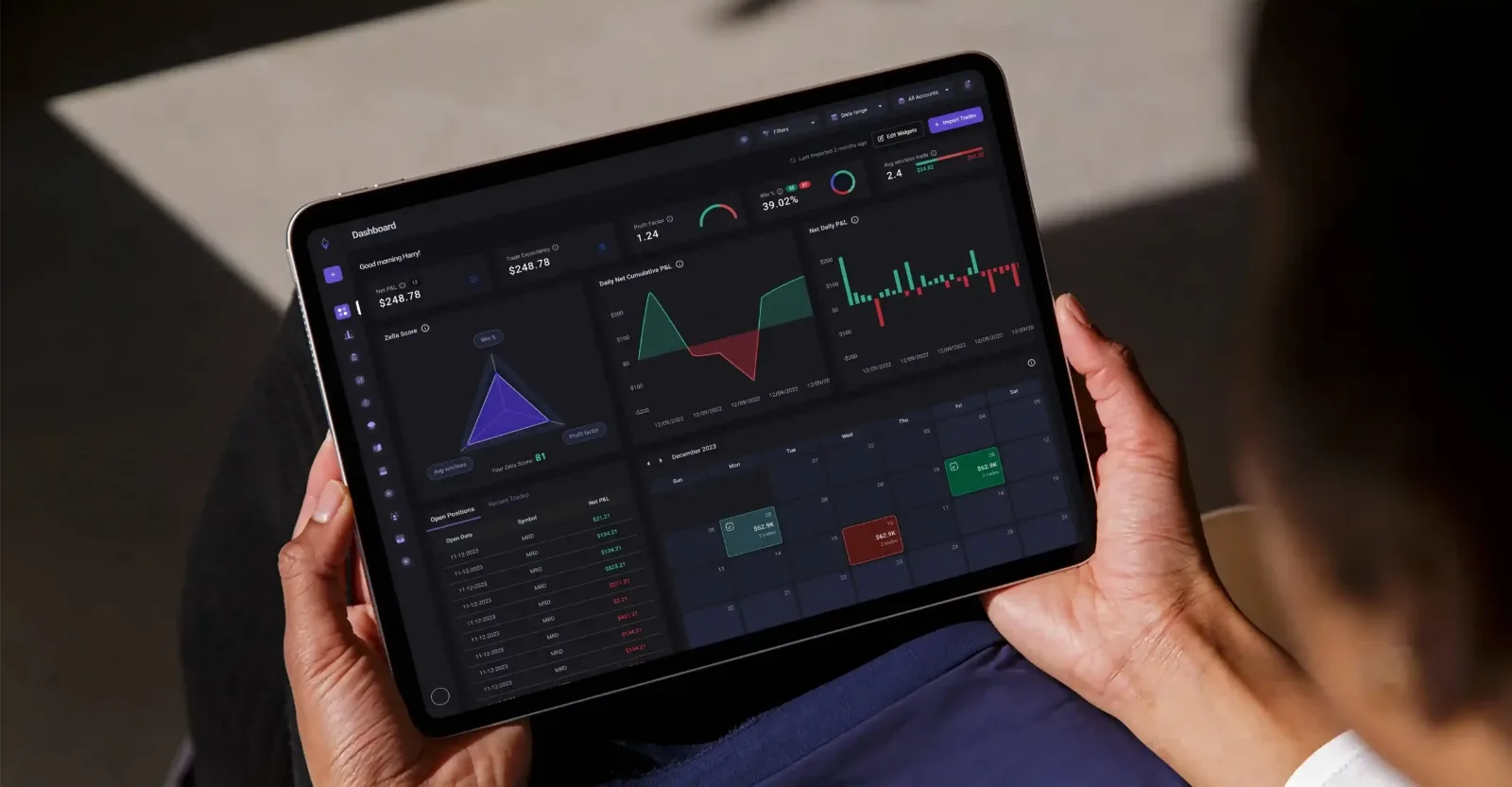
- Trading, portfolio and spending dashboards that put the number a user checks first at the top of the screen
- AI assistants and copilots for money questions that cite their sources, state their limits and hand off to a person
- Consent, disclosure, dispute and data-sharing screens, flagged for your compliance team in the same annotated Figma files developers build from
Why is fintech UX design harder than other SaaS design?
Fintech UX design carries every job of SaaS design, plus a regulator, a fraud team and a user who is nervous about money.
Identity checks sit inside sign-up
The Customer Identification Program rule (31 CFR 1020.220) has US banks collect name, address, date of birth and an identification number before opening an account, and fintechs that work with partner banks run similar checks. Document capture, a selfie or liveness check and manual review add waits a SaaS trial never has. Design job: explain each field and show the identity check's verification status.
Trust has to exist before the first deposit
A new user hands over a bank login or a Social Security number before seeing any value, so trust signals carry the screen. That is where banking UX design for neobanks and budgeting apps starts. Design job: say who holds the money, show fees and transfer timing up front, and write error messages that say what happens to the funds.
Disclosures and marketing copy are regulated
FINRA Rule 2210 requires broker-dealer communications, including websites, apps and social posts, to be fair and balanced, and it allows a legend or footnote only when that placement does not inhibit an investor's understanding. The rule also bars promissory or exaggerated claims. Design job: put the risk disclosure where the decision happens, right next to the button it qualifies.
Dense numbers on a small screen
Profit-and-loss (P&L) figures, balances, positions and limits compete for one phone screen. TradeZella's old interface hid the metrics traders care about most under clutter, and its dashboard redesign put net daily P&L in a single glance. Design job: one headline number per view, with drill-down to each trade.
AI answers about money carry real risk
The Consumer Financial Protection Bureau (CFPB) estimated that about 37% of the US population, more than 98 million users, interacted with a bank chatbot in 2022. Its June 2023 issue spotlight warns of wrong answers, privacy risks and "doom loops" with no route to a person. Design job: scope the assistant and keep a person within reach.
Accessibility is a legal exposure
In March 2022 the Department of Justice (DOJ) said the Americans with Disabilities Act (ADA) applies to the web content of businesses open to the public, and it named WCAG, the Web Content Accessibility Guidelines, as helpful guidance. Design job: target WCAG 2.2 AA, including success criterion (SC) 2.5.8, which sets a 24×24 CSS pixel minimum for tap targets.
Login is an accessibility test too
WCAG 2.2 adds Accessible Authentication (Minimum), SC 3.3.8, at Level AA: no step can demand recalling a password or transcribing a code unless an alternative or a helper such as paste or a password manager works. Design job: pasteable one-time codes and passkeys; the National Institute of Standards and Technology (NIST) SP 800-63-4 (final, 2025) covers synced passkeys as syncable authenticators.
Which of our services fit a fintech product?
AI UX design agency
User experience design for AI features and AI-first products, from prompt input to feedback loops.
02Chatbot UI design
Conversation design and interface design for AI chatbots, assistants and support bots.
03SaaS design agency
End-to-end product design for B2B and B2C software as a service.
04SaaS product redesign
Phased redesign of live SaaS products with an aging or inconsistent interface.
05MVP design agency
Design of a minimum viable product, from first research to a tested clickable prototype.
06SaaS onboarding design
Sign-up, setup and first-run design that raises SaaS activation.
What does our fintech UX design work cover?
Our fintech UI UX design work covers seven areas, from the first identity check to the controls an auditor asks about, each designed for review by your compliance team.
KYC and account opening
To cut KYC drop-off, we put easy fields first and the ID document last, with a progress bar, save-and-resume, camera guidance for document capture and a "we're reviewing" state with expected timing. Screens follow your identity vendor's software development kit (SDK); we don't pick the vendor or set risk rules. See SaaS onboarding design.
Payments, transfers and payouts
Users see the fee and arrival time before they confirm, then a transfer status tracker (pending, sent, arrived) and a receipt they can find again. Card fields live in your processor's hosted form with few third-party scripts nearby: Payment Card Industry Data Security Standard (PCI DSS) v4.0.1 governs payment page scripts under requirements 6.4.3 and 11.6.1, mandatory since March 31, 2025.
Trading, portfolio and spending dashboards
A financial dashboard gets one headline number per view, gains and losses marked by color plus a sign or label (never color alone, WCAG SC 1.4.1), and drill-down from summary to each transaction. In our TradeZella trading journal redesign, win-rate and profit-factor widgets sit on a dashboard each trader arranges.
AI assistants and copilots for money questions
Each AI answer card cites its sources, the account data or policy it used, and states its scope ("I can explain fees; I can't give investment advice"). Refusal and low-confidence states are designed, and a support chatbot keeps the human handoff one tap away. Our AI UX design agency team prototypes these with real model output.
Consent, disclosure and dispute flows
Consent screens for data sharing stay clear and revocable. The CFPB finalized its Personal Financial Data Rights rule (Section 1033) in October 2024 and reopened it for reconsideration in August 2025; a federal court has barred enforcement until that review ends, so we design to the principle. Disclosures sit at the decision point, dispute flows say what happens next, and audit logs record each consent change.
Controls your auditor will ask about
SOC 2 (System and Organization Controls 2) reports test the American Institute of Certified Public Accountants (AICPA) Trust Services Criteria: security is required, while availability, processing integrity, confidentiality and privacy are optional. Design supports SOC 2 controls such as role-based access, session timeouts and activity logs. Your auditor, not your designer, attests to them.
Accessible fintech by default
WCAG 2.2 AA is the design target on every flow: contrast, focus order, target size, accessible authentication and error messages that say how to fix the field. Products sold to federal agencies also need Section 508. If you also sell in the EU, the same consent and data-access flows have to meet the General Data Protection Regulation (GDPR).
Where does your fintech product lose people before the first deposit?
A 45-minute product review covers your sign-up, identity check and first transfer. A senior designer walks through each one and tells you which fixes to make first.
Book a product reviewWhat changes when fintech UX design is done well?
More people finish sign-up and verification
Short steps, saved progress and a visible review status remove reasons to quit an identity check, and every approved check is an account that can be funded.
Fewer "where is my money?" tickets
A transfer status tracker and plain-language errors answer the question before it reaches support or the chatbot.
Users who come back
TradeZella saw a 25% boost in user retention after its web and mobile redesign. That figure belongs to the whole redesign project, not to one screen.
Compliance comments in one file
Our annotated Figma files mark each regulated screen (disclosure, consent, risk text), so your compliance team and counsel review one file instead of a folder of screenshots.
Designs your engineers can ship
Our designers work beside tkxel engineers, who check build effort before a screen reaches you, and tkxel can build the product too. See our SaaS design agency work.
Ready to see your design opportunities?
Book a discovery callHow does a fintech UX design project run, step by step?
- 01
Discovery with product, risk and compliance
We interview users, read your analytics and list every screen a rule touches: KYC, disclosures, consent and card entry. Bring your risk and compliance leads to the first session.
- 02
Flows and prototypes for the riskiest paths
Account opening, the first transfer and AI answers come first, as clickable prototypes. AI prototypes show real or recorded model output, never placeholder text.
- 03
Interface and design system
Money components are built once: the amount input, fee row, transfer status tracker and P&L chart. Reusing them keeps fintech app design consistent across iOS, Android and web.
- 04
Testing with real users
Between 5 and 8 target users run real tasks before engineering starts. TradeZella's redesign, for example, was tested with traders before it went live.
- 05
Compliance review and build support
Your compliance team or counsel signs off on the annotated Figma files, we revise the screens, and our designers stay in your sprints until launch, or tkxel engineers build it with us.
What do US product teams ask about fintech UX design?
Straight answers about scope, timelines, pricing and how we work with your team.
Still have a question?
A senior designer replies to every message within one business day (ET).
Talk to a design leadCan you design our KYC and identity verification flow?
Can UX design make a fintech product compliant on its own?
How do you design AI assistants for financial products?
Which accessibility standard do you design fintech products to?
Which fintech case studies can we review?
What does fintech UX design cost?
Have an AI or SaaS product to design?
Tell us what you are building. A senior designer reads it, replies within one business day (ET) and books a call. Need an NDA first? We sign one before any technical detail.